"Why can't I get a credit card or loan” is something many of us might have asked at one point or another.
People are denied credit for various reasons — and it's not always because of something they've done. One of the most frustrating things can be trying to get credit so that you can build your credit history, but then you're denied because you don't have a credit history. It's like applying for a job and being told you aren't qualified because you have no experience.
Even if you were denied credit because of past mistakes, you can still act to change the course of your financial future. Here are some common reasons for declined credit applications — and what you can do about them.
Reason 1: You have a poor credit history.
Negative marks on a credit report can be the gifts that keep on giving. Factors that contribute to dings on credit history may include missed payments of 30 days or more or bankruptcy, both of which can haunt you for at least seven years.
This is understandable. Would you loan money to someone, even a family member or friend, who had a less-than-stellar reputation for paying people back?
The good news is, as each year passes, the negative impact on your credit report lessens. This gives you the opportunity to move the needle in your favor with responsible, consistent repayment behavior.
Reason 2: You have too much debt.
When lending companies review your application, they look at an important number called your debt-to-income, or DTI, ratio. In other words, they compare how much you owe each month to how much you earn.
If you already have too much debt, companies are reluctant to loan you money because they consider you a risk. So how can you ease their concerns? Try to keep your DTI ratio below 36%.
If debt is a problem, USAA has a three-step plan — Assess, Avoid, Attack — that puts you back in control of your financial destiny.
- Assess your debt by reviewing copies of your credit reports. Get a free copy of your credit reports at annualcreditreport.com Opens in New Window. See note 1 It's possible for incorrect information to appear on a credit report. You'll want to dispute any inaccurate information as soon as possible. While you're in assess mode, also look at your current spending and create a realistic budget that helps limit overspending and going more into debt. If you need help getting started, those who like to work with pen and paper can download our budget worksheet Opens in New Window. Those who prefer an online tool can use the free USAA budget tool.
- Avoid adding to your debt by tucking your credit cards away. Now's the time to contribute to your emergency fund. A great place to store these funds is in a savings account. Your goal is to save at least $1,000. You can find out why having an emergency fund is a high priority in our article, Should I save or pay off debt?
- Attack your debt, starting with either the one with the highest interest rate or the one with the smallest balance. Learn which strategy is right for you in our article, How to get out of debt. Rather than having a negative mark on your credit history for a late or unpaid payment, at least make the minimum payments each month on all your debts. When you can, use one of the debt payoff strategies to eliminate your debt by adding additional money toward your debt payments each month.
Lenders want to see that you know how to be responsible with how much you borrow before they’re willing to lend you more money.
Reason 3: You don't have a credit history.
It's frustrating to be denied credit even though you haven't done anything wrong. But look at this as a great opportunity. You get to start with a clean slate, managing debt and spending wisely from the start.
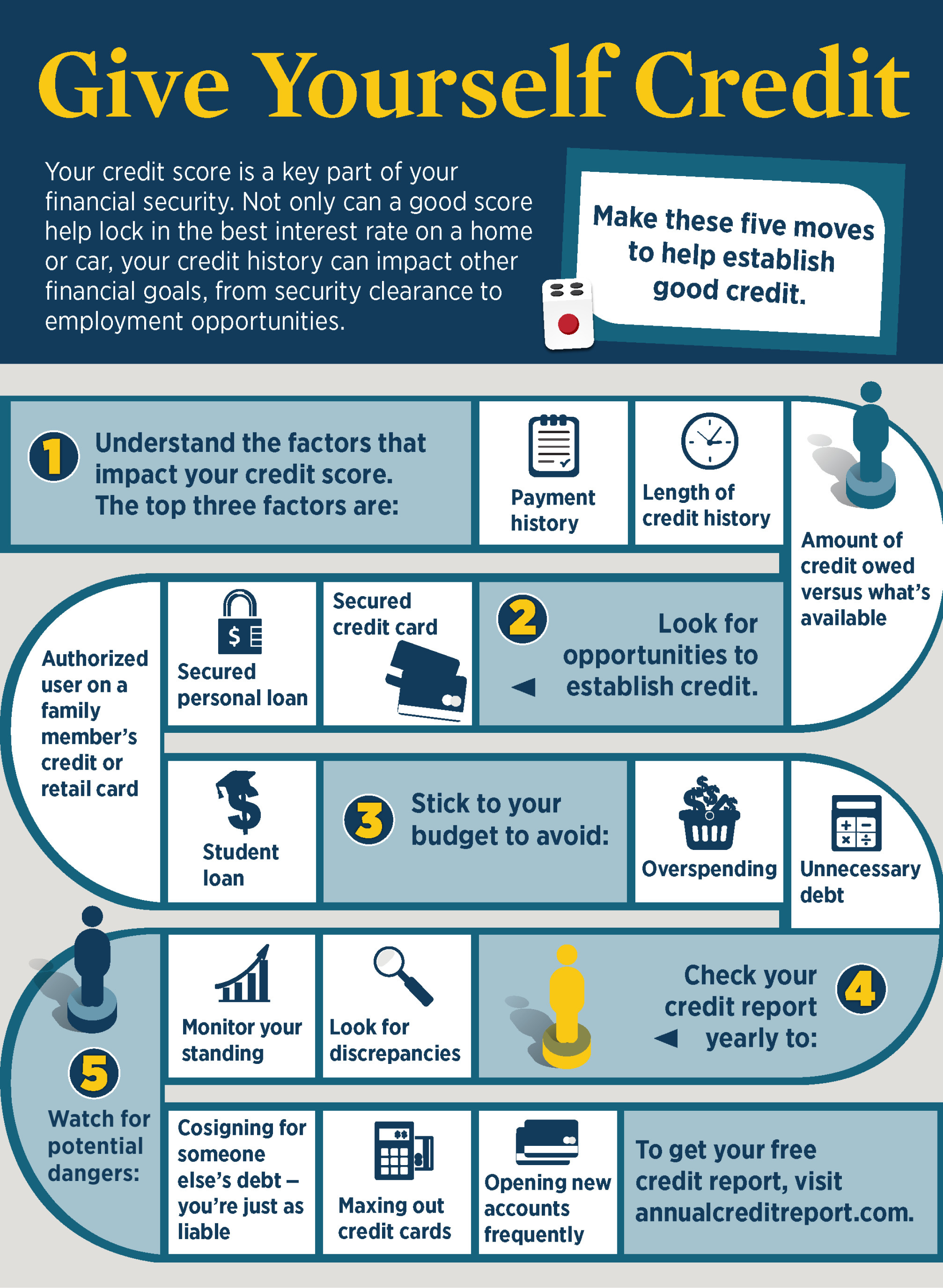
To establish credit, consider these options:
- Ask a family member with good credit to add you as an authorized user on their credit card.
- Consider applying for a different type of credit card. One great place to start might be with a secured card. In this case, you would need to provide the financial institution with a security deposit that will be equal to your credit limit. The security deposit could be a Certificate of Deposit (CD) or a savings account with that financial institution. You use the credit card as you normally would, and the financial institution reports your activity to the credit bureaus, which helps you build credit history. You get the benefits and the financial institution limits their risk. Eventually, after showing positive credit actions and improvement in credit score, you could be upgraded to an unsecured credit card.
- Another option may be applying for a personal loan. Having a diversified credit mix can be a good way to help improve your credit score. Lenders may consider a personal loan to someone with less credit history.
- Begin paying off your student loans. Your payments will be reported and can help you establish credit worthiness. This applies even if there was no credit check when you initially took out the loans, which can be the case with federal student loans.