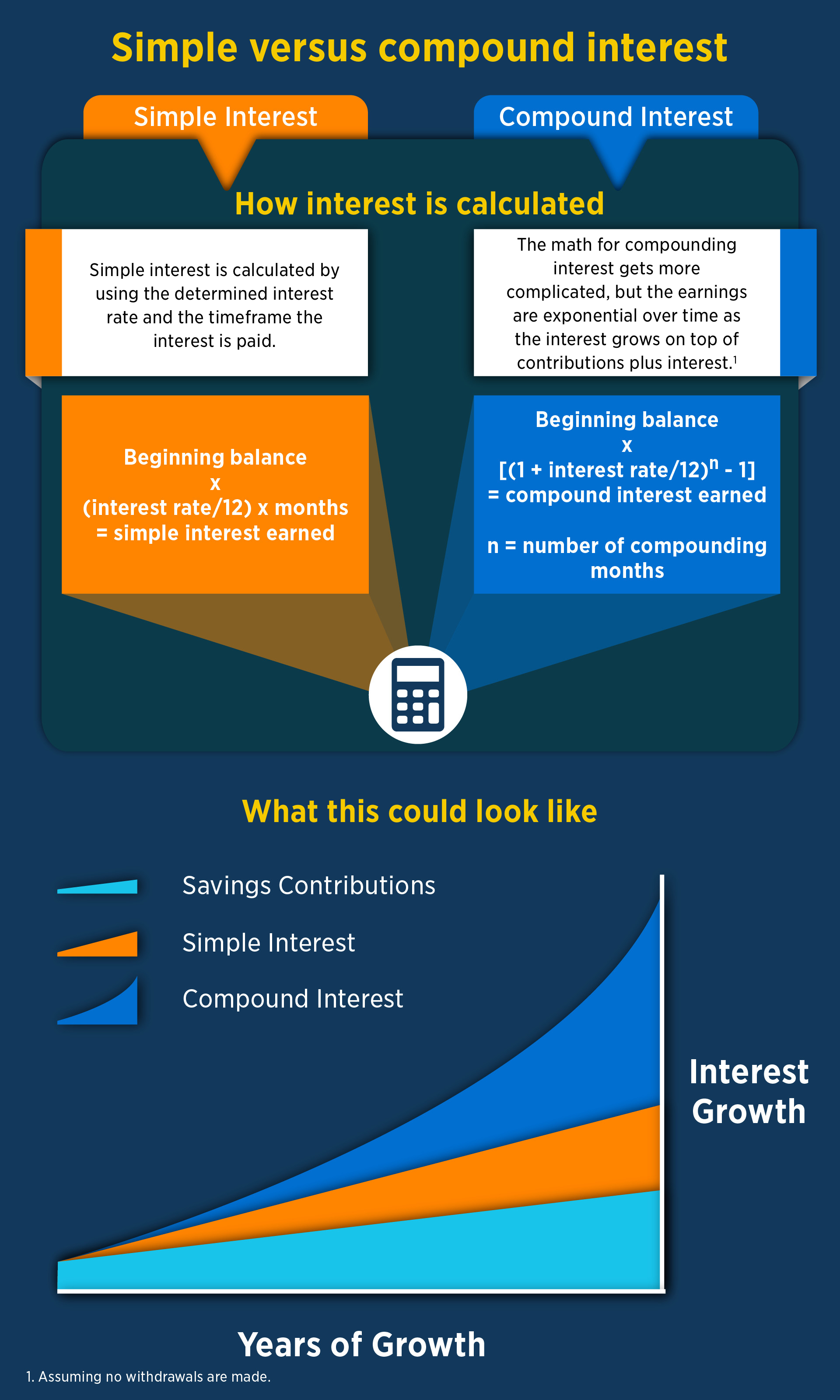
You earn more interest when you have larger account balances and leave the money in the account for longer periods of time.
What's the difference between the APY and interest rate?
- APY stands for annual percentage yield. It's the amount of interest on a savings account you would earn over a year, and it includes compounding interest.
- Interest rate is the amount of stated interest being paid by the bank without taking into account the compounding effect.
Interest rates can help you decide how to save.
Different banks offer different APY rates, advertised as percentages, for different types of accounts.
Some banks even offer a higher interest for larger dollar amounts deposited.
Compare the APY of multiple banks when you're shopping for the bank for you. Also, look at the various savings solutions the bank offers. The higher the APY percentage, the more interest you'll earn and the faster your money will grow.
It's important to note that some interest rates can fluctuate in response to the activities of the Federal Reserve. That's why on your bank statements you might see varying amounts of earned interest on a savings account. If the federal rate increases, banks will typically follow suit. If the federal rate decreases, so too will the banks'.
How banks pay interest on a savings account
The bank deposits savings account interest payments directly into the account. Interest is one way to more quickly achieve your goals like saving for a new home or an emergency fund.
APYs aren't the only consideration though, as you'll also want to consider things like fees, withdrawal limitations, digital capabilities and money transfer options. Fees in particular are important because they could negate the interest you earned, so be sure to consider all factors. But in the end, compound interest earned in a savings account can be a great way to accomplish short-term financial goals.