Think of a hammer as your monthly payments and imagine using it to smash down your debt. A small hammer may not make much of a dent, but a big one can clear your debt quickly. The bigger the hammer, the bigger your impact.
For example, let's say two people have $6,000 in credit card debt with the same 18% interest rate. One pays the minimum amount due, which starts at $150 the first month and decreases slightly each month.
The other pays $250 a month on a regular basis. By paying a little more — using a bigger hammer — the second person pays off their balance almost 22 years sooner. They also pay almost $7,000 less in interest. This illustrates the high cost of minimum credit card payments.
For some people, smashing debt isn't so easy. It doesn't help that there are multiple types of debt. In addition to credit card debt, there are things like mortgages, car loans and student loans. If you have more than one debt, instead of paying a little extra on all of them, you can focus your efforts on one and pay the minimum amount on the others.
But how do you know which debt to attack first? Here are two different strategies.
Strategy 1: Pay off your debt with the highest interest rate first.
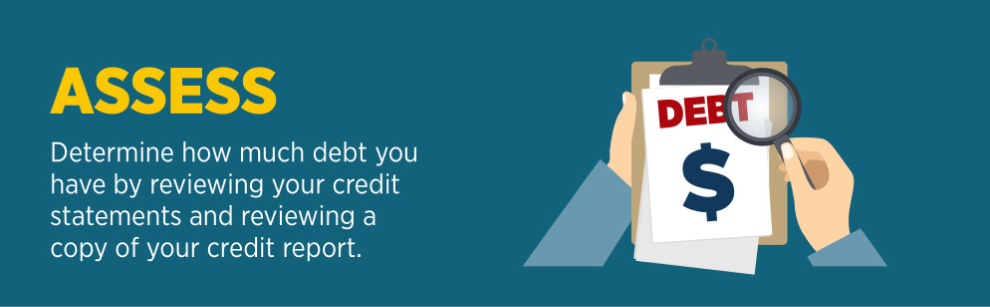
Once you've built your emergency fund, it's time to put that debt worksheet — the one you filled out during the "Assess" phase — to work. Start by looking at the "Interest Rate" column and see which is the highest. That's the one you want to pay off first.
Let's say you have an auto loan, medical bills and credit card debt. Out of the three, let's say your credit card has the highest interest rate. When using this strategy, start by paying the set amount to the auto loan and medical bills. For the credit card, pay as much as your budget allows.
Once you pay off the debt with the highest interest rate, look at your debt worksheet again. Find the one with the second-highest interest rate and attack it. Keep going until they're all paid off.
- Is this strategy right for me? Mathematically, this makes the most sense. This is the fastest way to pay off your total debt. Starting with your highest-interest-rate debt means you may not see that first account paid off right away. But, if you're disciplined and willing to look long term at your finances, it's the way to go.
- You can do it! If your highest-interest-rate debt has a big balance, it may take a while before you feel like you're making a dent. You're on the right track; stay the course.
Strategy 2: Pay off your smallest balance first.
When it comes to personal finance, there's a little art and a little science. Mathematically, Strategy 1 is optimal because you'll pay off your total debt fastest and pay the lowest in interest costs. But to be successful in the long term — to truly achieve financial freedom — you have to change your behavior.
Behavior change is often easier when you see good things happening because of your hard work. With this strategy, you'll see your efforts paying off right away.
Ready to get started? Look at the "Remaining Balance" column of your debt worksheet. Which one is the lowest? That's the one you want to attack first. Pay the minimum monthly payment on all other debts. Pay as much as your budget allows to the debt with the lowest remaining balance. Once you knock it out, start on the second-lowest balance. Keep at it until you're at the end.
- Is this strategy right for me? This is a simple, easy option for folks who need a quick win and want to see immediate progress.
- You can do it! Even though this strategy takes a little more time, you'll pay off your total balance faster if this strategy is what motivates you and help you stick to your long-term debt paydown strategy. Take time to celebrate your wins and keep up the good work.
By following these steps, you’ll be well on your way to achieving financial security. Whether you choose to focus on the highest interest debts or the ones with the smallest balance, the key is to remain consistent and disciplined. Regardless of your strategy, sticking to your debt plan may be easier with automatic payments through online bill pay.
USAA is here to help you every step of the way. For more information you can visit usaa.com/debt.